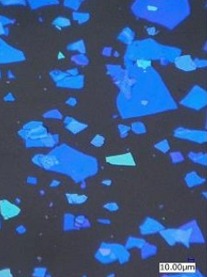
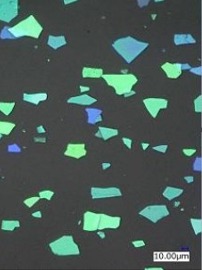
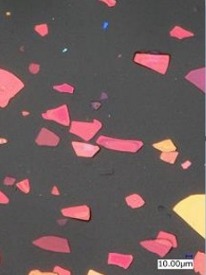
Five flagship pigment powders for eyeshadow, highlighter, lip gloss, and mascara formulation — Magnetic Cat-Eye, Photoluminescent Glow, Aurora Chameleon, Cloud Brocade Pearl, and Mirror Aluminum. Manufactured and priced as the highest grade available on the market, for cosmetics manufacturers, formulation R&D teams, labs, and procurement — not individual consumers.
Every powder ships with a batch-traceable sample ID. Full technical specification available on request at [email protected].
Fe3O4 magnetite pigment engineered for directional light response. Foiled or pressed into eyeshadow and highlighter formulas, it produces a sharp, sweeping line of reflected light across the lid or cheekbone rather than an even sparkle — the same optical mechanism behind cat-eye nail effects, repurposed for face and eye color.
SrAl2O4:Eu2+,Dy3+ phosphor — third-generation, brighter and longer-lasting than older zinc sulfide glow pigments. Charges under daylight or UV and releases a visible afterglow for 8+ hours. Peer-reviewed research on this phosphor class confirms it can be applied directly to skin with no reported adverse effects1, and it is non-radioactive and FDA-compliant for cosmetic use.
Multi-layer interference pigment that shifts color across the spectrum as viewing angle changes — teal to violet to rose to blue in a single sweep. Our flagship raw material: the finest particle grading and cleanest color travel we manufacture, and the only powder in the collection formulated for use across all four core applications, including loose shimmer for shimmer-topper mascara formulas.
A soft, diffused pearlescent sheen — closer to silk than glitter. Fine mica platelets scatter light gently rather than flashing, which is precisely the optical profile a highlighter formula wants: luminous, not glittery. A 2025 peer-reviewed cosmetic mica assessment confirms this particle class carries a favorable safety profile for topical cosmetic use2.
Aluminum silver paste — the true mirror-metal chrome pigment, the same raw material class behind the "chrome nail" trend. Customers typically blend it at roughly 10% into their own base formula. FDA-approved as a cosmetic colorant (21 CFR §73.2645), including for coloring externally applied cosmetics.
A distinct pigment class from the other five materials on this page: color is generated by a multi-layer optical thin-film structure (metal–dielectric–metal, vacuum-deposited), not by mica substrate interference coating — the same underlying technology family used in optically variable security features (currency, tax stamps), adapted for cosmetic color. LuxeFormula Labs has completed internal lab verification of this material and is now opening it up for sample testing to peer manufacturers, independent labs, and cosmetic factories evaluating it for their own formulations.
| Series | Optical Character | Composition (per material specification) | Particle Size (Dv50) |
|---|---|---|---|
| Twilight | Transparent, skin-tone dependent, soft candy-like color | Silica 42–92%, Titanium Dioxide 8–58% | 18–24μm / 45–60μm |
| Bloom | Opaque, strong coverage, metallic, narrow color-travel angle | Silica 93–96%, Aluminum 2–4%, Ti/TiO2 2–3% | 35–45μm |
| Flower | Translucent, strong coverage, narrow color-travel angle | Silica 40–90%, TiO2 5–30%, Iron Oxides (CI 77491) 5–30% | 35–45μm |
Open for sample testing to peer manufacturers, independent labs, and cosmetic factories evaluating this material for their own formulations — same $200 numbered sample process as the other five powders on this page (see below). Also open to universities, research institutes, and cosmetic science academic programs studying structural color or optical pigments — including graduate and PhD dissertation research — with academic sample requests handled case-by-case. Contact [email protected] to arrange lab-to-lab testing, academic research samples, or CoA documentation.
If you're a university color science program, optics/materials research lab, or PhD candidate researching structural color, thin-film optics, or novel cosmetic pigment systems, we're glad to discuss sample access for academic research use. This includes cosmetic science departments studying pigment safety, particle behavior, or formulation performance as part of thesis or published research. Academic requests are reviewed individually — email us with your institution, research focus, and intended use.
All five powders press cleanly into eyeshadow pans or work as loose-fill pigment. Aurora Chameleon and Magnetic Cat-Eye are the most requested for duo-chrome and foiled eyeshadow lines.
Cloud Brocade Pearl was engineered specifically for this category — a diffused, non-glittery luminosity.
Aurora Chameleon blends into a clear gloss base for color-shift lip trends. Photoluminescent Glow can be formulated into a novelty UV-reactive gloss.
Fine-milled Aurora Chameleon grades work as loose shimmer additive in topper mascara and lash-gloss formulas. Ask about our fine-grade milling for mascara-safe particle size.
Eyeshadow is the single largest application category on this page, and grade selection matters more here than in any other format — the wrong particle size reads as either chalky/flat or unpleasantly gritty on the lid.
| Look You're Targeting | Recommended Grade | Why |
|---|---|---|
| Smooth, blendable matte-adjacent shimmer | Grade O–2 (4–14.5μm) | Fine particle size lays flat against skin, blends without visible texture |
| Classic foiled/metallic eyeshadow | Grade 3–5 (14.5–23μm) | Larger flake reflects more light per particle for stronger metallic payoff |
| Chunky glitter-foil, duo-chrome flakes | Grade 7–9 (18–45μm) | Visible individual flakes for a multi-dimensional foiled finish |
| Cloud Brocade coarse-flake finish | mm-scale coarse flake (separate from Grade O–Q) | Large-format flake for a glass-fleck/confetti eyeshadow effect |
Full grading reference: LFL Particle Grade Standard. Pressed eyeshadow pans typically run 100% pigment loading (pressed pure or with a small % binder); loose-fill eyeshadow runs the same particle grades at 100% pigment with no dilution needed.
Magnetic Cat-Eye Powder behaves differently in eyeshadow than it does in nail polish, and formulators sourcing it for the first time often assume the mechanism is identical. It isn't.
Polish is applied wet, then a magnet is swept over the still-liquid lacquer, physically pulling the Fe3O4 particles into alignment before the film cures. The "sweep" is a post-application, per-nail step done by the end user or nail tech.
Pressed eyeshadow has no wet window for the end user to sweep a magnet over. The directional effect has to be built into the pan during manufacturing: a magnet is placed under the mold while the pigment is pressed, aligning the Fe3O4 particles into a fixed pattern that's permanent in the finished pan — the "cat-eye" or wave pattern is baked in, not swept in by the customer.
Practical implication for your production line: if you're formulating a magnetic cat-eye eyeshadow, you need a magnet fixture in your pressing tooling, not just the raw pigment. Ask us about pressing guidance when you order — this is a common gap for formulators moving from nail into eye color for the first time.
| Powder | Sample ID | Core Material | Best For |
|---|---|---|---|
| Magnetic Cat-Eye | LFL-EPP-01 | Fe3O4 magnetite | Eyeshadow, highlighter |
| Photoluminescent Glow | LFL-EPP-02 | SrAl2O4:Eu2+,Dy3+ | Eyeshadow, lip gloss |
| Aurora Chameleon | LFL-EPP-03 | Interference-coated mica | All four categories |
| Cloud Brocade Pearl | LFL-EPP-04 | Fine pearlescent mica | Highlighter, lip gloss |
| Mirror Aluminum | LFL-EPP-05 | Aluminum silver paste | Nail products, eyeshadow |
Every one of the five powders on this page is available across our full particle-size grade range. Grade is read directly off the batch code: the last character of the code is the grade.
| Grade | Code Suffix | D50 Particle Size |
|---|---|---|
| Grade O | ends in 0 | 4–5 μm |
| Grade 1 | ends in 1 | 5–9 μm |
| Grade 2 | ends in 2 | 9–14.5 μm |
| Grade 3 | ends in 3 | 14.5–18 μm |
| Grade 5 | ends in 5 | 18–23 μm |
| Grade 7 | ends in 7 | 18–25 μm |
| Grade 8 | ends in 8 | 25–35 μm |
| Grade 9 | ends in 9 | 35–45 μm |
| Grade Q | ends in Q | 50–65 μm |
Example: batch code M08-191 ends in 1 → Grade 1 → D50 5–9μm. Grades 5 and 7 are adjacent mill classifications with overlapping upper/lower cut points — confirm exact D50 on your Certificate of Analysis for tight-tolerance formulation work.
Not sure which grade gives the look you want? Email [email protected] and describe the finish — fine shimmer vs. chunky glitter-flake vs. soft diffused sheen — and we'll match it to a grade (standard or custom) for you.
The standard Grade O–Q table above is measured in micrometers (μm). Cloud Brocade Pearl's coarse-flake variant is a different, much larger particle class measured in millimeters (mm) — roughly 100× larger than a standard Grade Q particle. Don't assume coarse flake fits into the micron grade table above; confirm mm-scale specifications separately when ordering this variant.
Every batch is tested for eight heavy metal impurities. Results comfortably exceed FDA and China national cosmetic regulatory limits across all eight — see full comparison on the LFL Heavy Metal Purity Standard.
| Element | Pb | As | Hg | Cd | Sb | Cr | Ni | Co |
|---|---|---|---|---|---|---|---|---|
| Limit (ppm) | <10 | <1.5 | <0.5 | <0.5 | <2 | <10 | <10 | <5 |
Certificate of Analysis available on request with every order — [email protected].
LuxeFormula's raw material specifications reference current peer-reviewed literature on pigment safety and performance.
Each sample ID is logged against your account, so reorders and bulk quotes always reference the exact grade you tested — no ambiguity between batches.
We don't publish a fixed per-kilogram list price — as the top grade in the market, pricing is set individually once we know which powders and what volume you're ordering. The path to a quote runs through the sample set.
All five powders, serialized, mailed to you for evaluation.
After you evaluate your samples, tell us your target order volume.
We formulate any of these five powders into your finished, branded product.
Raw material only — dry pigment powder sold by the kilogram, for you to formulate yourself into eyeshadow, highlighter, lip gloss, mascara, or another cosmetic base. Want a finished branded product instead? Our OEM/ODM formulation team can build that from any of these five powders.
Depends on the finish you're after: Grade O–2 (4–14.5μm) for smooth, blendable shimmer; Grade 3–5 (14.5–23μm) for classic foiled/metallic eyeshadow; Grade 7–9 (18–45μm) for chunky glitter-foil and duo-chrome flake effects. See the full LFL Particle Grade Standard for the complete reference.
No — the mechanism is different. In nail polish, a magnet is swept over wet lacquer by the end user after application. Pressed eyeshadow has no wet window for that; the magnetic alignment has to be built in during manufacturing, with a magnet positioned under the mold while the pigment is pressed. If you're moving from nail into eye color for the first time, you'll need magnet fixturing in your pressing tooling — ask us for guidance when you order.
These are the highest grade, top-of-market powders we produce. Rather than a flat list price, we quote per kilogram based on your actual order volume once you've evaluated the numbered sample set — larger volumes receive stronger per-kilogram pricing.
Yes. The $200 functions as a deposit and is fully creditable toward your first bulk order — it isn't an extra cost on top of your eventual purchase, it's applied to it.
No. This raw material line is for cosmetics manufacturers, formulation R&D teams, labs, and procurement — businesses formulating their own eyeshadow, highlighter, lip gloss, or mascara products. It is not intended for personal or individual retail use.
Yes, particularly for the Structural Color Powder. We work with university color science and materials research programs, optics and thin-film research labs, and PhD/graduate researchers studying structural color, novel pigment systems, or cosmetic formulation science. Academic sample requests are reviewed case-by-case — email your institution name, research focus, and intended use to [email protected].
Each of the five powders is mailed with a unique sample ID (LFL-EPP-01 through 05). That ID stays linked to the exact batch and grade you tested, so when you place a bulk order or reorder later, there's no ambiguity about which material you're asking for.
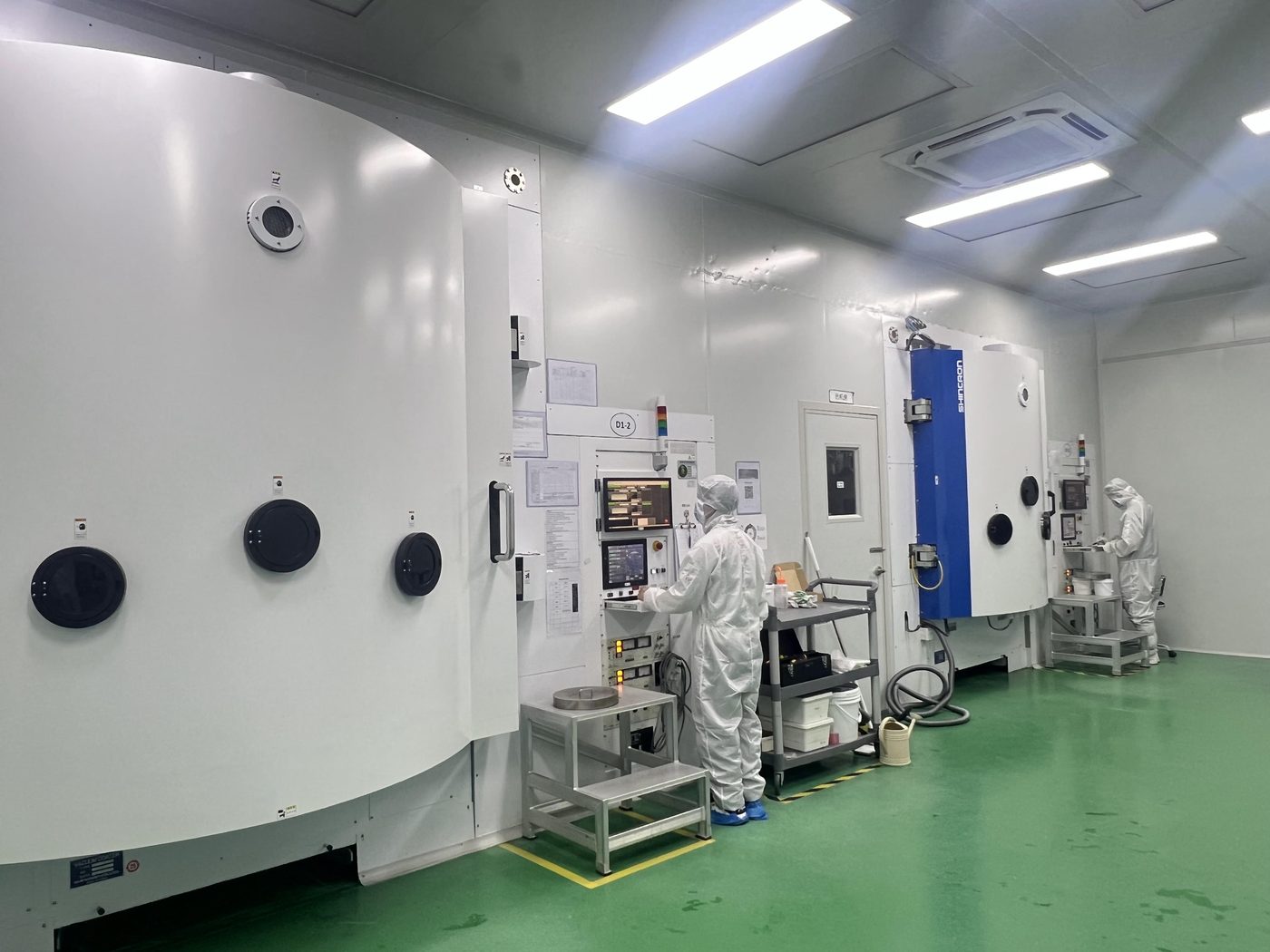
All five powders are cosmetic-grade materials manufactured at our FDA-registered facility (FEI 3031525994) under ISO 22716:2007 GMP, and every batch ships with a Certificate of Analysis and Safety Data Sheet. Mica-based pigments are FDA-listed as exempt color additives approved for lip and eye-area cosmetics. Eye-contact and lip-safe requirements vary by target market, so we recommend your own regulatory review — we can supply full documentation to support it.
Yes — Aurora Chameleon can be tuned for a custom color-travel range, and we offer fine-grade milling suitable for mascara and lash-topper formulas. This is quoted as a custom development project, separate from standard bulk pricing.
$200 for all five powders, mailed with individual sample IDs. Evaluate, then tell us your volume for a bulk quote.