← LuxeFormula Labs Order Raw Material →
Technology Reference

Color-Shift Pigment Technology

Two distinct mechanisms produce angle-dependent color shift in color cosmetics: interference-coated mica and multi-layer optical thin-film. This page documents both, and how each applies across seven cosmetic formats — eyeshadow, eyeshadow stick, liquid eyeliner, mascara, lip gloss, lipstick, and highlighter.

Two Mechanisms

Not all color-shift pigment works the same way.

Both mechanisms below produce the same visual effect — color that shifts with viewing angle — through physically different structures. The distinction matters for formulators: loading rate, particle behavior, and microscope-level quality control differ between the two.

Interference Mica — Aurora Chameleon

A natural mica platelet coated with a thin metal-oxide layer. Light reflecting off the coating and the mica surface interferes, producing a full-spectrum color shift. This is the conventional, widely used mechanism behind most "chameleon" or "duo-chrome" cosmetic pigments on the market. Available across the full LFL Particle Grade Standard range (Grade O–Q).

Multi-Layer Optical Thin-Film — Structural Color (New)

A free-standing, vacuum-deposited metal–dielectric–metal layer stack, fragmented into platelets — no mica substrate. Color arises from thin-film interference across the stack. The same underlying technology family used in optically variable security features (banknotes, tax stamps). LuxeFormula-verified; open for sample testing to peer manufacturers, labs, and universities.
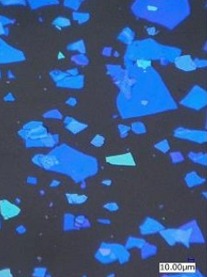
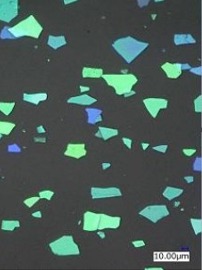
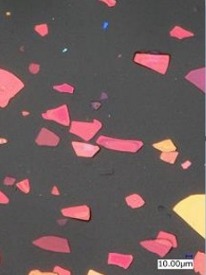
Structural Color Powder microscopy, blue series Structural Color Powder microscopy, green series Structural Color Powder microscopy, red series

LuxeFormula Labs in-house lab verification microscopy (50x magnification, 10μm scale) — flake-like platelet morphology characteristic of the thin-film structure.

Full technical documentation, including particle grading methodology and thin-film structure, is published as a citable report: DOI 10.5281/zenodo.21643738. Raw material specs: Effect Pigment Powders.

Applications

Seven formats, one pigment technology.

Particle grade and loading rate are the two variables that change most across formats — the underlying color-shift mechanism stays the same.

01

Eyeshadow

The deepest application on this page — see our dedicated Eyeshadow OEM & Private Label page for full formulation and packaging detail. Pressed pans and palettes typically run at or near 100% pigment loading; loose powder the same, unpressed.

Grade RangeO–9 (full range usable)
Loading~100% (pressed or loose)
02

Eyeshadow Stick

Cream-to-powder stick base carries the pigment at a lower loading than pressed powder, since the wax/oil carrier itself makes up a larger share of the formula. Finer grades blend more predictably into a stick base without a gritty set-down texture.

Grade RangeO–3 recommended
Loading15–30% typical in wax/oil base
03

Liquid Eyeliner

Pigment is suspended in a film-forming liquid base (water-based or solvent-based depending on wear/removal profile). Color-shift reads most clearly in liquid liner at higher loading, since the thin line format has less surface area than a full lid of eyeshadow — under-loading is the most common formulation mistake here.

Grade RangeO–2 (fine grade for smooth felt-tip/brush flow)
Loading8–15% in liquid suspension base
04

Mascara

Color-shift pigment is used almost exclusively in topper/shimmer mascara formats (layered over a standard black or brown base), not in primary volumizing formulas, since heavy pigment loading interferes with the wax/polymer film needed for lash coating and curl retention. Fine-milled grades only — coarse particles cause flaking and eye irritation risk in a lash-area product.

Grade RangeO–1 only (fine-milled, mascara-safe)
Loading3–8% in topper formulas
05

Lip Gloss

The high-shine, reflective base of gloss formulas showcases color-shift especially well — the glossy surface itself acts like a secondary reflective layer on top of the pigment. Works in both sheer/tinted and pigmented gloss bases. See our broader Lip Products line for base formula options.

Grade RangeO–3
Loading5–12% in gloss base
06

Lipstick

Solid lipstick bullets (wax/oil/butter base) carry color-shift pigment as a topper effect over an opaque base color, similar to eyeshadow stick logic — the matte or cream base color underneath does most of the coverage work, while the color-shift pigment sits as a thinner reflective layer for the angle-dependent shift.

Grade RangeO–2
Loading5–10% layered over base color
07

Highlighter

Highlighter is the format where color-shift pigment can be pushed to its highest loading, since the entire point of the product is maximum reflective payoff. Pressed highlighter pans behave like eyeshadow (near-100% loading); liquid/cream highlighter runs closer to gloss-format loading.

Grade RangeO–5 (coarser grades read well here)
Loading~100% pressed / 10–20% liquid-cream
Spec Summary

All seven formats, side by side.

FormatRecommended GradeTypical Loading
Eyeshadow (pan/palette/loose)O–9~100%
Eyeshadow StickO–315–30%
Liquid EyelinerO–28–15%
Mascara (topper only)O–13–8%
Lip GlossO–35–12%
Lipstick (topper layer)O–25–10%
HighlighterO–510–20% liquid / ~100% pressed

Loading rates are formulation starting points for lab testing, not fixed specifications — actual values depend on your specific base formula and desired intensity. Full particle grade definitions: LFL Particle Grade Standard.

Citation

How to cite this reference.

This page summarizes findings published in full in a citable, DOI-registered technical report. When referencing the underlying particle grading methodology or thin-film mechanism in academic, technical, or regulatory contexts, cite the report directly:

SUGGESTED CITATION
LuxeFormula Labs. (2026). Particle Size Grading and Multi-Layer Optical
Thin-Film Technology in Effect Pigment Powders for Color Cosmetics:
A Technical Reference (Version 1.0). Zenodo.
https://doi.org/10.5281/zenodo.21643738

Licensed under Creative Commons Attribution 4.0 International — free to cite, redistribute, and build on with attribution.

Regulatory & Research References

Sourced from real regulatory and scientific literature.

Mica Safety (2025 Study)

Peer-reviewed cosmetic safety assessment for mica-based pigments underlying the interference mica mechanism.

PMC12435160 →

Fe3O4 Biocompatibility

Review of magnetite (Fe3O4) nanoparticle safety, relevant to magnetic-responsive color-shift pigment.

PMC9285867 →

FDA — Eye Cosmetic Safety

US federal regulatory framework applicable to eyeshadow, eyeliner, and mascara formats on this page.

FDA: Eye Cosmetic Safety →

ISO 22716:2007 GMP

The Good Manufacturing Practice standard our facility operates under for all formats documented here.

ISO 22716:2007 →
FAQ

Common questions.

What is a color-shift (duo-chrome) pigment?

A pigment whose apparent color changes with viewing angle, produced by optical interference rather than a single colorant molecule. We document two mechanisms: interference-coated mica (Aurora Chameleon) and multi-layer optical thin-film (Structural Color Powder).

Which cosmetic formats can use color-shift pigment?

Eyeshadow, eyeshadow stick, liquid eyeliner, mascara (topper formulas), lip gloss, lipstick, and highlighter — see the spec table above for grade and loading guidance per format.

What's the difference between interference mica and structural color pigment?

Interference mica pigment is a mica platelet coated with a thin metal-oxide layer. Structural color pigment is a free-standing multi-layer optical film with no mica substrate, vacuum-deposited in a symmetric metal-dielectric-metal stack. Both shift color with angle through different physical mechanisms.

Is there a published technical reference for this pigment technology?

Yes. LuxeFormula Labs published a citable technical report on Zenodo (DOI 10.5281/zenodo.21643738) covering particle grading methodology and the structural color thin-film mechanism.

Get Started

Sourcing color-shift pigment, or building a finished product?

Raw material by the kilogram, or a finished OEM product — either way, we'll point you to the right next step.